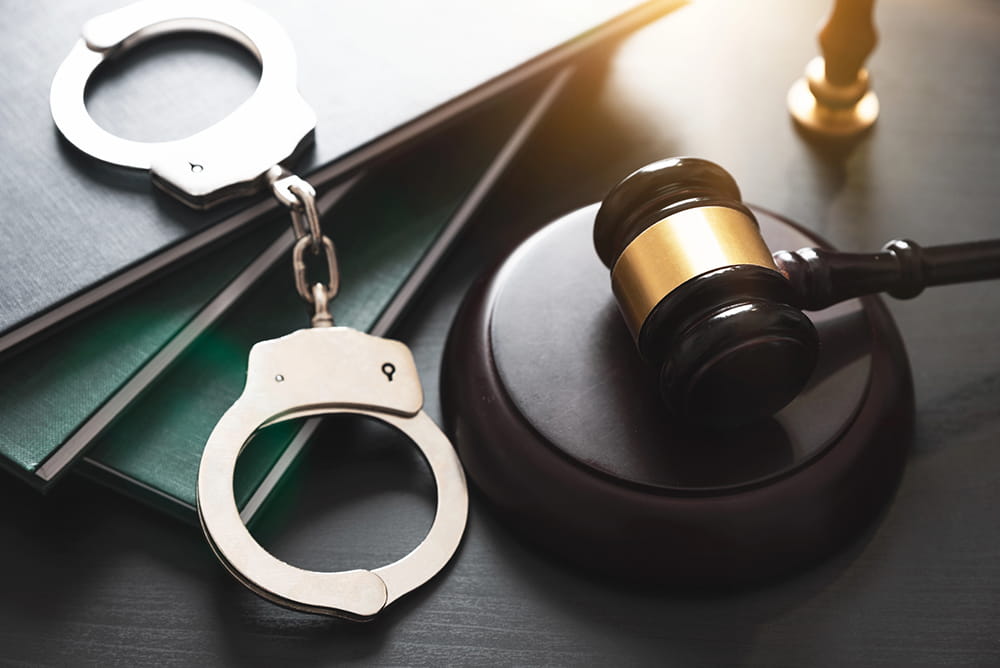
A criminal arrest in San Francisco is not just a legal challenge to licensed professionals but a risk to your whole career. A physician, real estate broker, nurse, or contractor charged in court may trigger an immediate and aggressive investigation by the relevant state licensing board.
You may think that the end of a criminal case is the end of your worries. However, in the case of state licensees, the battle may commence after the conclusion of your criminal court case. Even a plea bargain that does not result in jail time may amount to an admission of moral turpitude and may result in the automatic revocation of your license.
At San Francisco License Lawyer, fighting for your professional rights is our area of specialization. We are familiar with the intricate substantive relationship test applied by the California boards, and we work hard to build solid defenses.
Crimes and Criminal Defense in San Francisco, California
As a professional in California, you are expected to conduct yourself to a superior standard as opposed to the general population. This fact is brought out vividly when you end up sucked into the criminal justice system in San Francisco. The typical criminal defense lawyer will focus their attention on bailing you out and paying fewer fines, which is undoubtedly crucial. Nevertheless, the same lawyer can be wrong and lead you to take a plea bargain that will cost you a career but will save your freedom. To doctors, nurses, CPAs, teachers, and contractors, the collateral consequences of a criminal conviction are often far more severe than the punishment imposed by the court.
San Francisco has its local courts and the office of the District Attorney, where thousands of cases are processed, including those involving driving under the influence and complex financial fraud. Although the criminal court deals with the violation of the penal code, your licensing board, like
- Medical Board of California, Board of Registered Nursing (BRN)
- Contractors State License Board (CSLB)
- Department of Real Estate (DRE)
Functions under the California Business and Professions Code. These agencies have the independent power to discipline and investigate you. They do not ensure that the criminal court completes its business before they open their own files. Indeed, an arrest itself is sometimes sufficient to prompt an investigation.
The criminal defense of the profession in San Francisco demands an advanced knowledge of the two worlds. You must have a defense plan that extends beyond the short-term court case proceedings to the long-term sustainability of your license.
How San Francisco Criminal Charges Affect Licenses
The statutory process by which the licensing boards are authorized to discipline you due to the commission of criminal acts is located in the California Business and Professions Code Section 490. This law grants the board the power to suspend or revoke a license if the licensee has committed a crime that is significantly related to the qualification, functions, or duties of a business or profession for which the license was granted. This is referred to as the substantial relationship test, and it is the threshold issue in nearly all disciplinary cases involving criminal charges.
You may think that your personal life and what you do during your personal time do not affect your work life, particularly when the behavior was done during off-work hours. It is a false belief that poses a hazard. California administrative law judges and licensing boards take the substantial relationship test at a very loose interpretation.
When you are a nurse who is caught on a Saturday evening off duty with a DUI, the Board of Registered Nursing will claim that this will show a lack of judgment. It also points to the possible substance abuse problem that can harm the patients. In case you are a contractor who has been caught in a bar fight, the CSLB can say that this kind of violence indicates that you are a threat to the citizens and homeowners.
The test is concerned with the fact that the behavior is indicative of a possible inability to discharge the duties of your profession in a way that is not inconsistent with the public health, safety, or welfare. For example, a conviction for tax evasion may seem unrelated to the physical capabilities a dentist requires.
However, the Dental Board will perceive it as a gesture of dishonesty that will erode the trust that the public places in a medical practitioner. The board has no burden of proving that you actually hurt a client or a patient, but just that the crime indicates that you have a character weakness or a behavioral problem that may result in harm. This proactive quality of professional license discipline provisions implies that virtually any criminal offense in San Francisco can be reformed to suit the significant relationship model, unless forcefully opposed.
Common Offenses Putting San Francisco Professionals at Risk
Although any criminal charge has the potential to prompt a board investigation, there are specific criminal acts that are most common within the San Francisco courts and are associated with particular and predictable threats to professional licenses. It is essential to understand how your specific board perceives these typical crimes so that you can develop a defense strategy that will avoid administrative fallout.
DUI and Substance Abuse Allegations
Perhaps the most widespread criminal offense to which licensed professionals in San Francisco become involved is driving under the influence. Due to the high density of urban areas in San Francisco and the high enforcement rate of the area, even a first-time DUI can cause a lot of professional headaches. To healthcare personnel, such as nurses, physicians, and pharmacists, DUI is hardly regarded as a mere traffic offense by the board. Instead, a DUI arrest is commonly viewed as an indicator of a more serious problem with substance abuse by the Medical Board and the BRN.
Once the board is notified about a DUI charge, they tend to swing directly to an inquiry into your competence to practice. They can insist that you take a psychological or substance abuse assessment. In case of conviction, including a misdemeanor DUI, the board can put your license on probation, where you have to undergo random biological fluid tests, support groups, and work under supervision for years.
Crimes of Moral Turpitude
San Francisco is a financial, technological, and real estate capital, and accusations of white-collar crime are one of the concerns that significantly affect those in the field. A crime of moral turpitude is a crime characterized by dishonesty, fraud, or deception. This legal group poses a significant threat to professional licenses.
When you are a real estate broker, CPA, or attorney, your career is all about fiduciary duty and trust. A grand theft conviction, an embezzlement conviction, a forgery conviction, or even a minor theft conviction sends a message to the board that you cannot be left alone with client money or sensitive data.
In the moral turpitude crimes, the substantial relationship is established nearly automatically. The licensing board shall state that honesty is one of the major prerequisites for possessing a license. As a result, such convictions can lead to the harshest disciplinary measures, including revocation.
Domestic Violence and Violent Crimes
All California licensing boards are very severe in charging violence-related offenses, including domestic battery, assault with a deadly weapon, or simple assault. The rationale is that you are a threat to the community since you tend towards violence. As a teacher, nurse, or care provider, the board will claim that in the event you are violent in your personal life, you cannot be entrusted with the lives of vulnerable students or patients.
The board may not even wait for a criminal conviction before acting in cases involving violent crimes. They can request an Interim Suspension Order (ISO) from an administrative law judge. An ISO simply suspends your license, awaiting the consequences of the criminal and administrative inquiry, effectively denying you your income while you defend yourself.
This is a violent strategy adopted when the board believes that allowing you to continue with the practice poses an imminent threat to the public’s safety. Thus, domestic violence arrests require the purpose of your San Francisco license defense lawyer to be to avoid an ISO being issued by proving that the event was a one-off. It does not represent an overall threat to society.
The Disciplinary Process From Live Scan to Administrative Hearing
Most professionals are surprised to learn how quickly their licensing board becomes aware of their legal issues. It is a fast and automated procedure. The first time you were licensed in California was when you forwarded your fingerprints through Live Scan to the Department of Justice.
This formed a lasting connection between your criminal history and your professional license. When you are booked in a jail in San Francisco or even cited and released on a misdemeanor, the DOJ system automatically flags your file. It passes a special notification to the licensing board of which you are a member. This is commonly referred to as a subsequent arrest notification.
This is because your board is likely aware of your arrest days before you have even employed a criminal defense lawyer or appeared in court for your arraignment. After receiving this notification, the board opens an internal investigation. The board may also send you a letter requesting that you provide information or a copy of the police report.
It is one of the most critical crossroads at which most professionals commit fatal mistakes. It is your obligation to cooperate, but you have the right to remain silent and not incriminate yourself. Everything you transmit to the board investigator could and will be used against you in both the administrative and criminal proceedings.
Moreover, there is a compulsory obligation to disclose convictions within a period, which is, in most cases, 30 days, imposed by most boards. Some boards also require the reporting of indictments or arrests related to specific charges. Failure to report is a separate disciplinary offense that may result in license discipline, even if the criminal charges are later dismissed.
It is then transferred to the investigation stage, followed by the filing of an official accusation. Without settling the matter, it goes to an administrative hearing in the Office of Administrative Hearings (OAH). This is a trial in which the board tries to demonstrate that you are unfit to practice. This timeline is essential, as it highlights the urgency of legal intervention; you cannot afford to wait until the criminal case is concluded before presenting it to the board.
Strategic Defense to Protect Your Liberty and License
Due to the doubling of the risk, your defense strategy should be doubled. This is the two-front offense that we practice at San Francisco License Lawyer. It is not an isolated silo of the criminal case and the license case, and they are intertwined. All motions made and all words uttered in the criminal courtroom should be measured to bring minimal harm in the administrative hearing. Winning is not only about not getting to jail, but also about having your name remain on the professional registry.
Negotiating “License-Safe” Plea Bargains
The evidence against the defendant is also substantial in most criminal cases, and a dismissal is unlikely. Plea bargaining would be the primary resolution tool in such situations. But to a licensed professional, the charge you are pleading to is of utmost importance. An ordinary public defender may advise admitting to a charge with no jail term, but not for a crime of moral turpitude or a significantly related offense. This is a trap.
We are planning to negotiate license-safe plea bargains. This involves identifying minor charges that do not warrant automatic disciplinary action. As an illustration, a domestic violence case would mean that pleading to that particular case would be suicide for your career.
However, pleading guilty to a disturbing the peace/trespass charge may be a way of placating the prosecutor, who needs to secure a conviction but does not want the sentence to appear on your professional record. Likewise, in DUI cases, your lawyer fights against a wet reckless reduction, which they can have since it is not as stigmatized as a straight DUI conviction.
The Importance of Mitigation and Rehabilitation
According to California law, as stated in BPC Section 482, licensing boards are required to consider evidence of rehabilitation when determining discipline. This is the strongest weapon you have. You cannot just wait until the administrative hearing to begin demonstrating that you are a safe and ethical professional. We assist you in creating a comprehensive “Mitigation Package” from the outset.
In case the charge is substance abuse, we might refer you to commit to treatment voluntarily, go to AA/NA meetings, and get documented evidence of sobriety so that the board never requests it. When the offense involves financial impropriety, voluntary restitution must be made as soon as possible.
We also collaborate with you to get character reference letters from your colleagues who are familiar with the charges, yet they still attest to your professional competence. With an account of the rehabilitation and character testimony on record, we can frequently obtain a settlement with the board, a public reprimand, or a temporary probation instead of revocation.
We lay this evidence very early and often endeavor to induce the board to discontinue the investigation without prosecution by a formal accusation. In case of an accusation, such mitigation evidence will become the focal point of your defense during the administrative hearing, which will prove that the public is not in danger, and you should keep your hard-earned license.
Find a San Francisco License Lawyer Near Me
The criminal justice system can be challenging to navigate, and the fear of losing your professional license adds another burden. The administrative aspect of a criminal charge must not be overlooked. The boards of California professional licensing are vigilant and are automatically informed of your arrest via the Department of Justice Live Scan system. The boards tend to institute discipline before your criminal case is concluded.
You need a license defense lawyer who understands California Business and Professions law and knows how to handle both district attorneys and board investigators effectively. At San Francisco License Lawyer, we offer aggressive, specialized representation to help save your career. We assist you in making self-reporting mandates, combat dismissals, and provide strong evidence of rehabilitation to prevent the suspension of your license. Call us at (415) 496-2811 to book your free consultation.